





Introduction
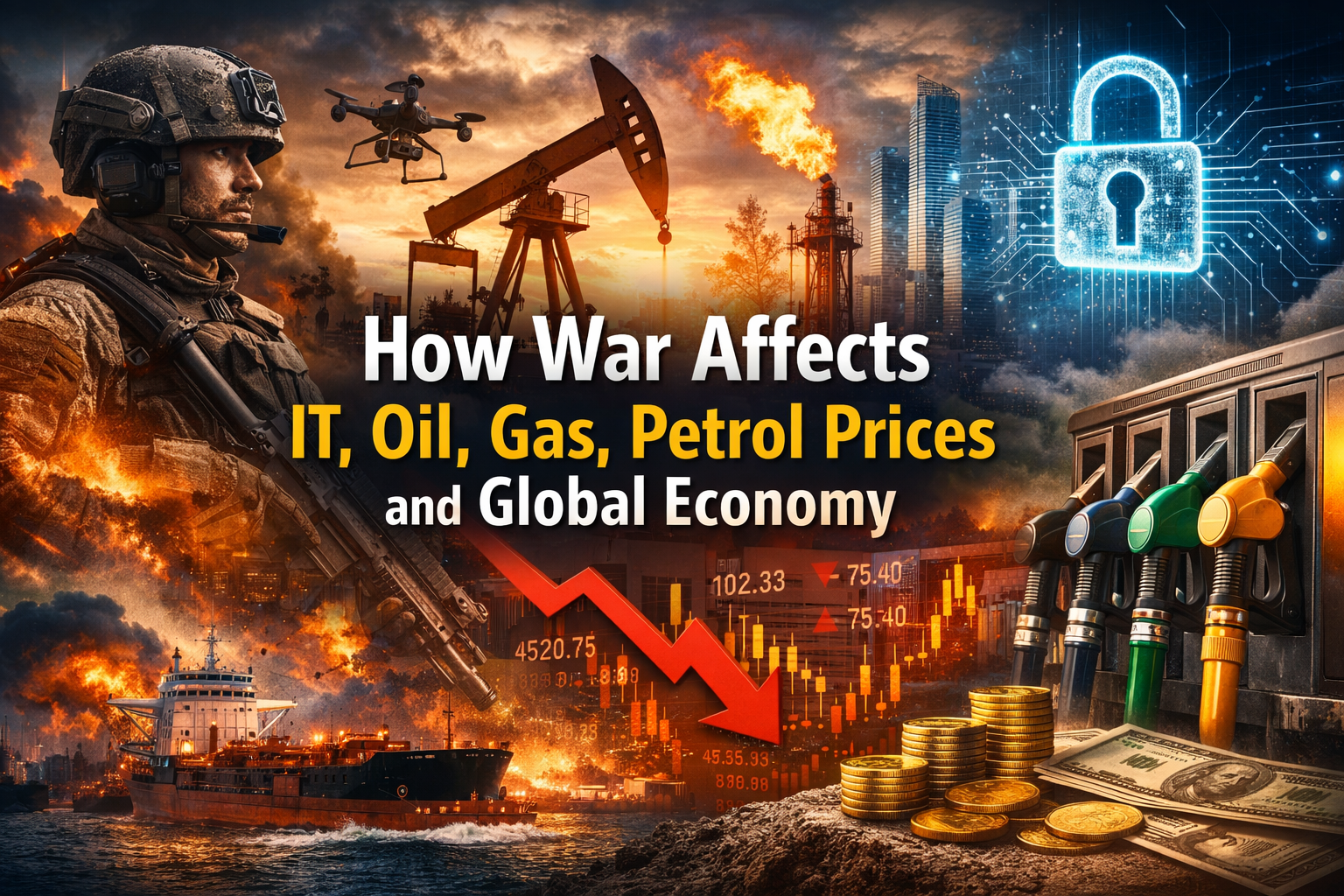
Wars have always had a significant impact on global economies and industries. In today's highly connected world, the consequences of war extend far beyond the battlefield. Major sectors such as information technology, oil and gas, transportation, and global supply chains are often affected during geopolitical conflicts.
One of the most visible effects of war is the sudden increase in fuel prices and economic instability across countries. Businesses, governments, and individuals all experience the ripple effects of these conflicts in different ways.
Impact of War on the IT Industry
The IT industry depends heavily on stable global infrastructure, reliable internet connectivity, and international collaboration. During wars, these factors can be disrupted due to cyber attacks, political sanctions, and restrictions on technology exports.
- Increase in cyber warfare and hacking attempts
- Greater investment in cybersecurity technologies
- Disruptions in global technology supply chains
- Increased demand for defense and surveillance technologies
Interestingly, war can also accelerate innovation in the technology sector. Governments invest heavily in artificial intelligence, cybersecurity systems, and communication technologies to strengthen national security.
Rising Petrol and Diesel Prices
Fuel prices are among the first things affected during global conflicts. Many oil-producing regions are located in politically sensitive areas. When war breaks out, oil production and transportation routes can be disrupted.
As supply decreases and global demand remains high, the prices of petrol and diesel increase. This leads to higher transportation costs, increased product prices, and inflation across multiple industries.
- Increase in petrol and diesel prices
- Higher transportation and logistics costs
- Rising inflation in global markets
- Economic pressure on developing countries
Impact on the Oil and Gas Industry
The oil and gas industry is one of the most sensitive sectors during wars. Conflicts in energy-producing regions can cause massive disruptions in global supply chains.
Countries may impose export restrictions, governments may release strategic oil reserves, and energy markets often become highly volatile during conflicts.
- Reduced oil production in conflict regions
- Volatility in global energy prices
- Increased geopolitical tension in energy markets
- Acceleration of renewable energy investments
Global Supply Chain Disruptions
Modern industries rely on global supply chains to transport raw materials, components, and finished goods across countries. Wars can disrupt these supply chains by blocking shipping routes, damaging infrastructure, or creating trade sanctions.
As a result, industries may experience delays in production, shortages of essential materials, and increased manufacturing costs.
- Shipping route disruptions
- Shortage of raw materials
- Manufacturing delays
- Increased product costs
Impact on Financial Markets
Wars create uncertainty in financial markets, which often leads to volatility in stock prices and currency values. Investors typically move their investments toward safer assets such as gold and government bonds during periods of geopolitical tension.
- Stock market instability
- Currency fluctuations
- Increase in gold and safe-haven investments
- Reduced investor confidence
Impact on Transportation and Logistics
Transportation and logistics industries are directly affected by rising fuel costs and security concerns during wars. Airlines may cancel routes, shipping companies may avoid conflict zones, and insurance costs for transportation increase significantly.
These factors lead to higher delivery costs and longer shipping times for goods across global markets.
Conclusion
Wars affect multiple sectors of the global economy. From rising petrol and diesel prices to disruptions in the IT industry and global supply chains, the economic consequences of war can be widespread.
Understanding these impacts helps governments, businesses, and individuals prepare for economic challenges during geopolitical conflicts. While technological innovation and energy diversification may emerge from these situations, global cooperation remains essential for long-term stability and economic growth.